Zuci Life
Zuci (Shuchi) is a Sanskrit word meaning Pure.
To live a Zuci Life means living a pure life—one dedicated to cleansing both body and mind. By adopting practices that align with the universal laws of nature, we learn to live in true balance and harmony.
Yanung Lego Mam herbal medicine and dietary guidance naturally cleanse the physical body of the diseases.
Vipassana purifies the mind, eradicating miseries and dissolving mental conditioning so you can live fully in the present moment.
Visiting Yanung Jamoh Lego Mam’s Clinic in Pasighat
This page is not affiliated with the Yanung Jamoh Lego Clinic. It is a community resource created solely to guide travelers on how to reach Pasighat and collect medicine safely.Please visit the Yanung Lego Official Website for details on medicine and treatment.Pre-TravelYanung Jamoh Lego Ma’am’s herbal clinic is located in Pasighat, Arunachal Pradesh. While there is basic information floating around on Facebook and Instagram, practical travel details are hard to find—especially if you're traveling from outside Northeast India.In September 2026, I traveled there solo to collect medicine for a family member. Going in, I had very limited information and plenty of doubts. But once I arrived, the locals were warm, generous, and guided me every step of the way. Having gone through the process firsthand, I wanted to share this practical guide to save others the uncertainty.1. Permits: ILP and PAP
Arunachal Pradesh is a protected state, and permits are mandatory before you enter.For Indian Citizens (Inner Line Permit - ILP):
You need an Inner Line Permit e-ILP. While you can technically get one on arrival at the Assam–Arunachal border (Ruksin check gate), apply online in advance through the official Arunachal e-ILP portal to avoid long queues or delays at the border.For Foreign Passport Holders (Protected Area Permit - PAP):
Foreign nationals require a Protected Area Permit. The standard portal suggests processing takes 7–14 days and often discourages solo travel applications. However, I applied as a solo traveler on the eFRRO Online Portal medical grounds, attaching the patient's medical reports to establish the clear purpose of my visit. The Foreigners Registration Office (FRO) in East Siang (Pasighat) was helpful and granted my permit within two business days.Important: Carry 2–4 hard copies of your approved ILP/PAP, along with your original ID. You will be asked to present it at police and military checkpoints along the way.2. Medical Reports
Do not rely on showing soft copies or PDFs on your smartphone. The consulting practitioners examine past medical history thoroughly. Carry clear physical printouts of all recent medical reports, scans, and prescriptions for each patient.
Note: Keep latest reports, discharge summary handy and if possible create a summary page for reference which you can use while explaining to the assistant doctor. Other important things to note down on the summary page are: Patient Name, Patient Father/ Husband Name, Aadhar card number, Mobile number.3. Packing & Shopping List for Carrying Medicines
The liquid herbal medicines come in glass/plastic bottles (typically two to six 500 ml bottles per patient). Because liquids in these volumes are strictly prohibited in cabin baggage on domestic flights (such as flying out of Dibrugarh), you must pack them securely for check-in baggage.You can buy these items at the local Pasighat market, or bring them along:White 100% thick cotton cloth (2 meters per patient): Essential for wrapping and securing the herbal preparation bundles. Make sure it is plain white—never colored—to prevent synthetic dyes from bleeding into the medicine. It’s best to pre-wash and dry the cloth before your trip, as you will be using it continuously over the 3-month course of treatment.Brown packaging duct tape: For sealing bottle caps tightly to prevent leaks during transit.Safety pins (a pack of assorted sizes): Used to bundle and pin the wrapped medicine packs neatly.A sturdy, transparent plastic storage box: Sized to fit 6 bottles of 500 ml each. Placing the wrapped bottles inside a rigid container prevents them from being crushed or damaged by airline luggage handling.A lightweight foldable duffel/tote bag: Handy as a backup piece of check-in luggage in case the medicines take up more room than expected.An empty hard-shell check-in suitcase: Keep your personal luggage light (3–4 days of clothes) so you have ample space and weight allowance for the medicines.4. Flights & Staying Flexible
If you can manage the budget, consider booking only your inbound flight initially (or opting for a flexible ticket with minimal change fees). Consultations, preparation of specific herbal formulas, and dispatch times can vary depending on patient load. Having an open-ended or flexible return ticket gives you the breathing room to complete the process without the stress of missing a flight.Getting to Pasighat: Travel, Transport & Stay Guide
Note: The contact numbers, homestays, and transport details listed below are shared purely to help travelers navigate the journey smoothly based on firsthand experience, with no commercial affiliation.1. Flights to Dibrugarh (Assam)
While Pasighat has a regional airstrip, flights are limited. The most reliable route is flying into Dibrugarh Airport (DIB) in Assam, roughly 150 km away.Inbound: Both Air India and IndiGo operate direct flights from Delhi (3 hours). Connecting flights with layovers are available if you are on a budget.Return Flight Recommendation: Book a direct return flight if possible. The herbal medicines must not remain packed in damp, airtight conditions for long to avoid spoilage. Reaching your final destination within 3–5 hours allows you to unpack and air the bottles promptly.2. From Dibrugarh Airport to Pasighat
You have two main options to reach Pasighat from Dibrugarh:Option 1: Private Taxi (Fastest & Direct)Route: Directly from Dibrugarh Airport to Pasighat.Travel Time: Around 2.5-3 hours.Cost: ₹3,500 – ₹4,000.Option 2: Shared Bus / Winger (Budget-Friendly)Route: Take an auto from Dibrugarh Airport to Hotel Moon Star / Arunachal Cottage (15 km away). The auto fare is around ₹300 total (can be split if sharing). From there, take the shared bus directly to Pasighat.Schedule: The shared bus departs around 4:00 PM and arrives at the Pasighat main bus stand around 8:00 PM (it makes several local stops along the way). The shared bus costs ₹500 per passenger.Contact: Jibon Pradhan (+91 99543 58992). He coordinates rides from the Dibrugarh pickup point and can confirm schedules and fair rates.3. Border Checkpoint & Documentation (Ruksin Gate)
The route crosses the Bogibeel Bridge over the Brahmaputra River and enters Arunachal Pradesh via the Ruksin Checkpost around early evening.Keep 2–4 hard copies of your ILP (Inner Line Permit) or PAP (Protected Area Permit) handy along with original photo ID / OCI card.If you hold an OCI card with a PAP, the checkpoint staff may take a few extra minutes to verify your paperwork due to unfamiliarity with overseas documentation. As long as your paperwork is valid, there will be no issues.4. Accommodation Options in Pasighat
The bus terminates at the Pasighat Main Bus Stand area. Choosing where to stay depends on your travel setup:Near the Clinic (GTC Area) — Best for Solo Travelers:Walking distance to the clinic, making it easy to join early morning token queues.Trade-off: Limited pure-vegetarian food options nearby.Chanakya Homestay: Located directly on the main road opposite the clinic. Clean, spacious rooms with attached bathrooms. AC rooms are around ₹2,500/night; non-AC rooms are roughly ₹1,500/night. Keep in mind: There is a wine shop on the ground floor and local meat stalls nearby, which can make the area noisy in the night.Pasighat Market / Bus Stand Area — Best for Families:Offers larger hotels, markets, and dedicated vegetarian restaurants (such as pure veg Rajasthani Thali place).Requires taking an auto to the clinic early in the morning (~10–15 minutes). While regular auto services typically start around 4:00 AM, you can arrange with an auto driver the previous evening to pick you up as early as 2:00 AM so you can secure an early spot in the clinic line.5. Recommended Timing & Scheduling
To get the medicine on Saturday, I planned to arrive Pasighat by Thursday evening: Fridays and Saturdays are typically the busiest days at the clinic.Arriving by Thursday night allows you to join the token line early Friday morning (around 3:00–4:00 AM), complete your consultation that same day, and potentially receive freshly prepared medicines by Saturday—or even Friday itself (we were fortunate enough to receive ours the same afternoon).Token Note: A limited number of tokens (typically 50–200) are issued on weekdays. While Wednesday and Saturday are by far the busiest consultation days, tokens are still distributed and medicines are prepared on other days like Thursday and Friday.Step-by-Step Guide: Tokens, Doctor Consultation & Medicine Collection
1. Night-Before Reconnaissance & Early Morning TimingLocate the clinic in daylight/evening: It helps to walk the route once the previous evening so you know the exact landmarks (such as Milibo Homestay and the adjacent café) and don't get lost in the dark.Stray dog caution: Local streets have active stray dogs before dawn. Walk calmly, carry a small torch or stick if walking alone, and avoid abrupt running.When to arrive: In Arunachal Pradesh, sunrise happens very early. While gates are generally accessible by 4:00 AM, people often begin assembling from midnight on busy days.Pack light essentials: You will be standing and waiting for hours. Wear comfortable, loose clothing and carry drinking water, a light snack (fruits/salad), and physical copies of all patient reports.Informal queue system: Often, early arrivals self-organize by jotting names on an informal paper sheet (separate lists for men and women) to maintain order before the official counter opens. This helps ensure fair queue discipline once the main token window opens around 7:45–8:00 AM.2. Registration & Token Counter (Opens ~8:00 AM)
At the counter, staff will ask for the patient's name, phone number, and physical medical reports.Registration Fee: ₹100 per patient.Token Classification:(A) Cancer cases: Assigned tokens starting with C (e.g., C-15).(B) Non-cancer cases: Assigned numeric tokens (e.g., 82).3. Doctor Consultation & Digital RecordAssistant Doctor Review: You will be called into a consultation room where an assistant doctor thoroughly reviews past medical records, scans, and biopsy reports, asking detailed questions before writing a customized prescription.Scanning & Verification: Next, you proceed to an administrative desk where the prescription and relevant medical report pages are scanned into their computer system.You are then directed to a waiting area while the prescription is sent directly to the herb preparation platform.4. Medicine Formulation & CollectionLive Herb Preparation: Behind the scenes, fresh mountain herbs gathered and cut by the clinic staff are assembled on an elevated platform. Ma’am and her team hand-select and pack specific combinations into polybags matched to each patient's specific condition (e.g., lung cancer formulations differ from oral/mouth cancer formulations).Collection & Payment: Batches of 20–30 tokens are called at a time near the preparation platform. Assistant staff calls patient name/token number, hand over the package, and collect payment.Estimated Medicine Costs (3-Month Course):Cancer Patients: Approximately ₹6,500 – ₹7,500.Non-Cancer Patients: Approximately ₹4,000 – ₹6,000.Prescription Separation: Each bag has the patient's prescription stapled or tucked inside. If you are collecting for multiple patients, keep the prescription papers strictly inside their respective bags so medicines never get mixed up.Additional Products (Optional / Shelf-Stable):Herbal Pain & Skin Oil: Used for joint pains, arthritis, skin conditions, and hair vitality (usable by anyone). Cost: ~₹500 per 100 ml bottle.Herbal Protein Powder: Given to cancer patients, but safe for non-cancer family members as well. Cost: ₹500 per pack.Tip: Unlike the fresh live herbs that must be used within 3 months, these sealed bottles and powder packs have longer shelf lives if you wish to purchase extras.5. Dosage Briefing & Instructions (Crucial Step)
After collecting your medicine, an assistant practitioner leads you to a dedicated room to explain the exact preparation method, dosage, and dietary precautions.Important Tip: Record a clear video on your phone during this briefing. The instructions involve multi-step brewing and timing instructions that are easy to forget once you head home. Having a clear video reference avoids guesswork later.6. Transport to Main Bazaar & Packing Supplies
The full 3-month medicine bundle is quite heavy and bulky. Local autos right outside the clinic can drop you to your homestay (300–500m) or take you to the Pasighat Main Bazaar (fare: ~₹150 one way).In the main bazaar, you can purchase your packing supplies (cotton cloth, duct tape, safety pins, transparent plastic boxes, and sturdy travel bags).Vegetarian Dining Tip: If looking for hygienic pure-vegetarian food in the bazaar area, ask the auto driver to take you to the local Rajasthani Thali restaurant for wholesome, reasonably priced meals.Handling Live Herbs Overnight at the Homestay and Flying Home SafelyFresh herbs from the mountains are alive and full of moisture. Because dampness trapped inside an airtight bag can trigger fungus within hours, proper handling, drying, and packing are critical to getting your medicine home intact.1. Overnight Drying at the HomestaySpread Immediately Under a Slow Fan: As soon as you return to your room, fold your clean white cotton cloth in half on the bed or clean floor and spread the herbs out in a thin, even layer. Keep the ceiling fan running on low to medium speed throughout the night.Label the Cloth: If carrying medicines for more than one person, write the patient’s name in the corner of the cloth with a permanent marker to prevent accidental mix-ups.Turn the Herbs by Hand: With clean, dry hands, gently turn and fluff the herbs a couple of times before sleeping. This aerates the bottom layer and prevents moisture pockets from forming.Harmless Insects: Because these plants are gathered directly from wild mountain forests, small insects may emerge as the herbs dry. Do not panic or try to kill them; they naturally crawl away into the room overnight.What to Avoid: Never place the live herbs under direct harsh sunlight, and never store them inside a refrigerator.2. Packing into a Breathable "Potli" & Bottled JuicesMaking the Cloth Bundle (Potli): By morning, the surface moisture will have receded. Pull the corners and edges of the white cloth together over the herbs, creating a round bundle (potli) with the herbs resting in the center. Secure the folds neatly with safety pins, and tie a firm knot at the top.Important: Keep the bundle secure but not airtight. The plants need gentle airflow to prevent heat buildup during travel.Bottled Liquids (Juices & Drops): Cancer patients typically receive up to six 500 ml bottles (such as Sanjeevani juice, Kesar formulation, and nasal drops), while non-cancer prescriptions may include only one or two bottles.Tightly seal every cap using brown packaging duct tape to prevent pressure leaks in flight.Pack the taped bottles securely inside the rigid, transparent plastic box to shield them from rough baggage handling.3. Taxi Back to Dibrugarh AirportA shared Winger bus has limited luggage space and unpredictable stops. For the return journey, hiring a private taxi is recommended to protect the medicine and avoid transit delays.Driver Contact: Protul (+91 94353 49258). Taxi fare is approximately ₹3,500 – ₹4,000 (can be halved if sharing with another traveler).4. Airport Security, NOC & Check-in DetailsNo Objection Certificate (NOC): Before leaving
Bag Inspection & Airing Out: Dibrugarh airport security is familiar with Dr. Lego’s clinic and handles passengers warmly. Because live herbs respire and generate natural internal heat, the inside of your suitcase can become damp and warm even during the 3-hour car drive.
Before the final baggage tag is attached, open your suitcase in the departures area for 15–20 minutes to let the built-up vapor dissipate. Keep the cloth bundle intact.Strong Herbal Scent & Condensation: Expect a distinct, pungent botanical aroma and visible dampness on the exterior of your luggage by the time you collect it from the baggage carousel. This moisture is natural plant condensation, not a leaking bottle.Cabin Luggage vs. Check-in: The sealed liquid bottles must go into checked luggage due to airline liquid limits. The herbal cloth bundle itself (weighing roughly 7–9 kg) can occasionally be taken as cabin baggage if weight limits permit, provided you handle it gently.5. Storage at Home & Daily PrecautionsInspect for White Fungus: Once home, inspect the herbs under good lighting. If any small patch shows white mold or fungal growth from transit humidity, carefully pinch and discard that section immediately so it does not spread.Ensure you look after the live herbs properly throughout the 3-month treatment: keep them spread out on the clean white cloth, air them under a ceiling fan, protect them from direct sunlight, and gently turn them by hand at least once every day."Trust the medicine wholeheartedly, for healing happens when you approach these living herbs with devotion rather than doubt. Follow the dietary precautions strictly - especially cutting out meat, dairy, and sugar - as deep faith and disciplined lifestyle are the twin foundations of recovery."Important Warning: There are no backdoor routes, express lanes, or paid shortcuts to get medicines faster. Never pay touts, middlemen, or agents claiming they can arrange medicines on your behalf—you risk being scammed or given counterfeit products. Medicine is issued only through the official clinic process.
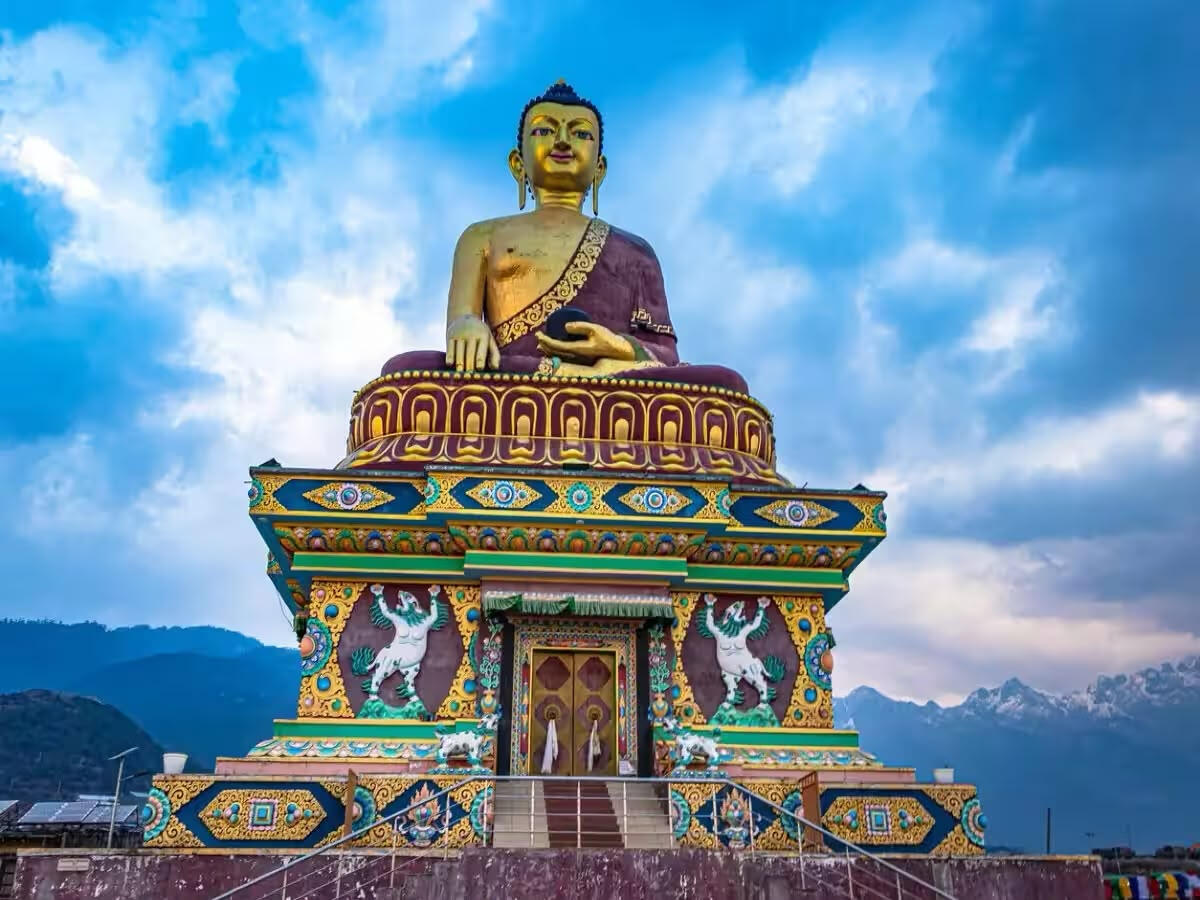
The First Thing in 40 Years I Couldn’t Copy: My Journey to Vipassana
From a copied devotee, to a copied intellect, to experiencing reality as it isUnexpected Turn
For 40 years, without fully realizing it, I lived my life copying others - family, friends and strangers.In my youth, I was a Copied Devotee. I copied my mother going to temples and fasting, until it became transactional - demanding things from God in return for rituals. I copied my father's busyness just to show how busy I was, my sister's study habits just to rank first in exams with no deep understanding and my brother's charm to attract people around me. By my 20s and 30s, I shifted into a Copied Intellect. I read books, started living in an intellectual bubble and recited texts to family and friends simply to prove my intellect.Turning 40 became the real pivot in my life. Suddenly, my intellectual bubble burst when I lost my job, leaving me with zero clarity on what was next - except for a planned trip to India to celebrate family birthdays. On the last night of the holiday, I told my sister that while I spent my 30s chasing money, I didn’t want to do that in my 40s; I wanted to build a meaningful family life.On my way back to Sydney, I had a 12-hour layover in Colombo that gently pointed me in a new direction. While visiting Gangaramaya Temple, a monk tied a thread with five white beads on my right wrist, and I felt an unexplainable sense of connection. Soon after, at the floating Seema Malakaya temple, I saw the statue of the Fasting Buddha (Bodhisattva). I couldn’t pull my eyes away, and a sudden urge made me sit down and meditate right there. In hindsight, I can name these statues and describe these feelings, but back then, they were just quiet, unnamed pulls.Back in Sydney, while searching for job, with my family still away in India, the idea of Vipassana surfaced again. I found courses in Melbourne and Brisbane whose dates aligned, and a week before the start, a spot opened up at Dhamma Rasmi in Pomona, near Brisbane. This time, instead of planning or controlling every step, I let things happen on their own. I took the train up from Sydney and walked into the Dhamma Rasmi to begin the 10-day Vipassana journey without any clue of meaning of Dhamma, Vipassana and it's Buddha teaching.Vipassana for Me
Vipassana is a scientific, practical technique discovered by a human being - the Buddha. It sharpens the mind and makes it super focused until it becomes acutely aware of the subtle physical sensations happening within the body, such as tingling, pulsing, throbbing, pain, heat, cold and perspire.At the core of this technique lies a simple yet powerful insight into human nature: whenever our sense doors come into contact with the outside world, physical sensations arise on the body and the mind reacts to them instantly. If a sensation is pleasant, we react with craving (clinging to money, family, property). If it is unpleasant, we react with aversion (anger, hatred, envy). Because this reaction happens at the subconscious level of mind, we feel powerless to stop it, remaining trapped in a cycle of suffering.Vipassana breaks this cycle. It trains the mind to firstly be aware of these physical sensations and secondly observe the sensations equanimously - neither craving the pleasant nor resisting the unpleasant and trusting the law of impermanence (Anichha). By observing equanimously, we actively dig out deep-rooted mental impurities, aligning ourselves with the universal law of nature - Dhamma.The path is grounded in three practical pillars:Sila (Morality): Right thoughts, words and actions.Samadhi (Concentration): Training the mind through the breath (Anapana) to feel physical sensations.Panna (Wisdom): Systematically scanning sensations from head to toe with an equanimous mind and trusting in the law of impermanence (all living and non-living things in the nature change - nothing is permanent).When you observe sensations without reacting, you stop creating new sankharas (deep rooted karmas). By not creating new sankharas the old stock of sankharas begins to surface, dissolve, and leave the body - leading to the path of Dhamma.It Was My First True, Uncopied Experience
Every book or ritual I followed in the past was borrowed from someone else. Vipassana was the first time I experienced truth directly within my own physical structure/ body.There was only the possibility of learning the technique, with zero room to copy anyone. Under Noble Silence, no conversations and no eye contacts with anyone, no books for reading and no notebooks for writing. All I had was my physical body and the clothes; everything else—from the food to the room was on charity. I was left entirely alone with myself.Day by day, the practice went deeper. Whenever my mind tried to wander, hallucinate, or get overwhelmed, when my body was completely exhausted, words from my family kept me anchored: it is not an out-of-this-world experience, stay grounded by touching trees and plants, and we have 200% confidence in you. I reached points where fatigue hit hard, physical pains broke my body and mental strength shook me but an inner quiet strength carried me through 100 hours of meditation .By Day 9, I felt blessed when I felt sensations through my entire body from head to toe and the solid pain in the body and mass dissolved into what felt like wavelets. In that stillness, I saw clearly that the heavy burden of "I, Me, Myself" I had carried for forty years was purely an illusion.That shift cannot be copied from someone else, nor can it be found on the pages of a book. It can only be felt, observed, and lived within your own body framework.Dhamma Takes You Where You Need to Be
Dhamma is the universal law of nature. My belief is that it doesn't run on rituals, transactions, or intellectual debates. It reacts directly to our thoughts, words, and actions. Nature rewards or punishes us based on morality. As I hold on to envy, hatred for someone, nature starts punishing me and I start suffering right away. The moment I help someone, serve others selflessly without expecting anything in return, nature rewards me.I’m not yet 100% sure whether it was something from my past lives or this life's actions that brought me to the path of Dhamma. But discovering Dhamma changed a lot for me, inside and out. The constant need to be in control, the urge to chase money, and the reflex to stay angry just started to lose their grip. Dhamma doesn’t give you what your ego wants; it gives you a clean mirror to see what you're holding deep inside which you have stopped observing.Committing to Sila, Samadhi and Panna every day has made one thing true for me: whether I chose Dhamma or Dhamma found me, when I live according to how nature actually works, it slowly takes away all the past miseries and puts me exactly where I need to be i.e. current moment, reality as-is (Yatha Bhute). I live my life day by day and moment by moment without being in the past which I can't change and the future which I don't know."I genuinely wish peace, happiness, and well-being for all of you. I hope your Dhamma find you and guide you on your own path, just as it did for me."
Thank You
Thank you for your query and we'll respond within 72 hours